

A safe generator hookup is the difference between a usable house during an outage and a tangle of extension cords. It also protects the line crews working to restore your power. Here is how the options compare.
Three ways to do a generator hookup
1. Inlet box and interlock kit
This is the most popular setup for portable generators. We install a weatherproof power inlet on the outside wall and an interlock on your main panel. During an outage you plug the generator into the inlet, switch the main breaker off, and the interlock lets you turn on the circuits you want to power. The interlock physically prevents the main breaker and the generator breaker from being on at the same time.
2. Manual transfer switch
A transfer switch feeds a set of chosen circuits from the generator. It is a good fit when you only want a few essentials on backup power and prefer a dedicated switch next to the panel.
3. Standby generator connection
A permanently installed standby generator starts automatically when the power goes out, through an automatic transfer switch. We handle the electrical side of standby installs, including the transfer switch and the wiring to the panel.
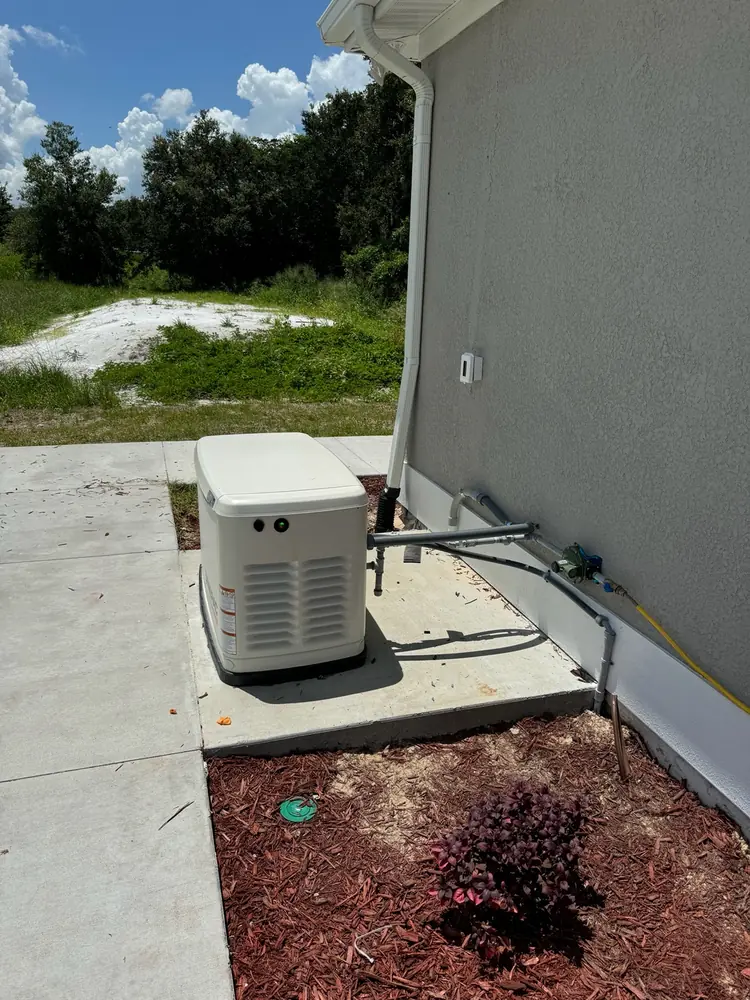
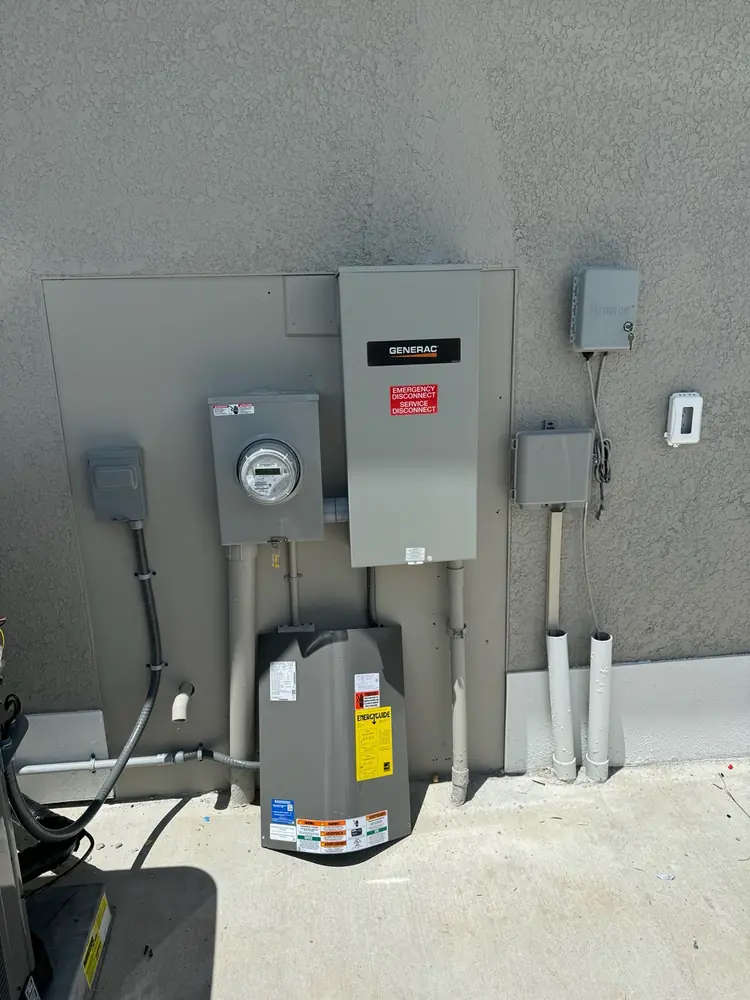
Plugging a generator into a dryer or wall outlet with a double-ended cord can energize the utility lines outside your home and can injure line workers. It is also a fire risk. A proper generator hookup with an interlock or transfer switch prevents this.
Sizing your generator hookup
The inlet and cord have to match the generator. Common portable setups use a 30-amp or 50-amp inlet. Before we quote, we ask for the generator model and what you want to run, then size the inlet, the breaker and the cord so they work together. If you have not bought a generator yet, we can tell you what size of connection your panel can accept.
Before hurricane season
The best time to schedule a generator hookup is well before a storm is in the forecast, when parts are easy to get and schedules are open. Our article on hurricane season electrical prep covers what else to check before June.
Run any generator outdoors, well away from doors, windows and vents. The CDC explains how carbon monoxide poisoning happens and why generators should never run inside a garage.
What is included
- Inlet box, interlock kit or transfer switch installed and labeled
- Generator breaker sized to the inlet and the generator
- Permit and inspection where required
- A walkthrough of the switchover steps, so you can do it in the dark during a storm
Want backup power ready before the next storm? Request a free quote or call (941) 920-8417.